
2026 Legislative Focus: Housing Bills Take Center Stage
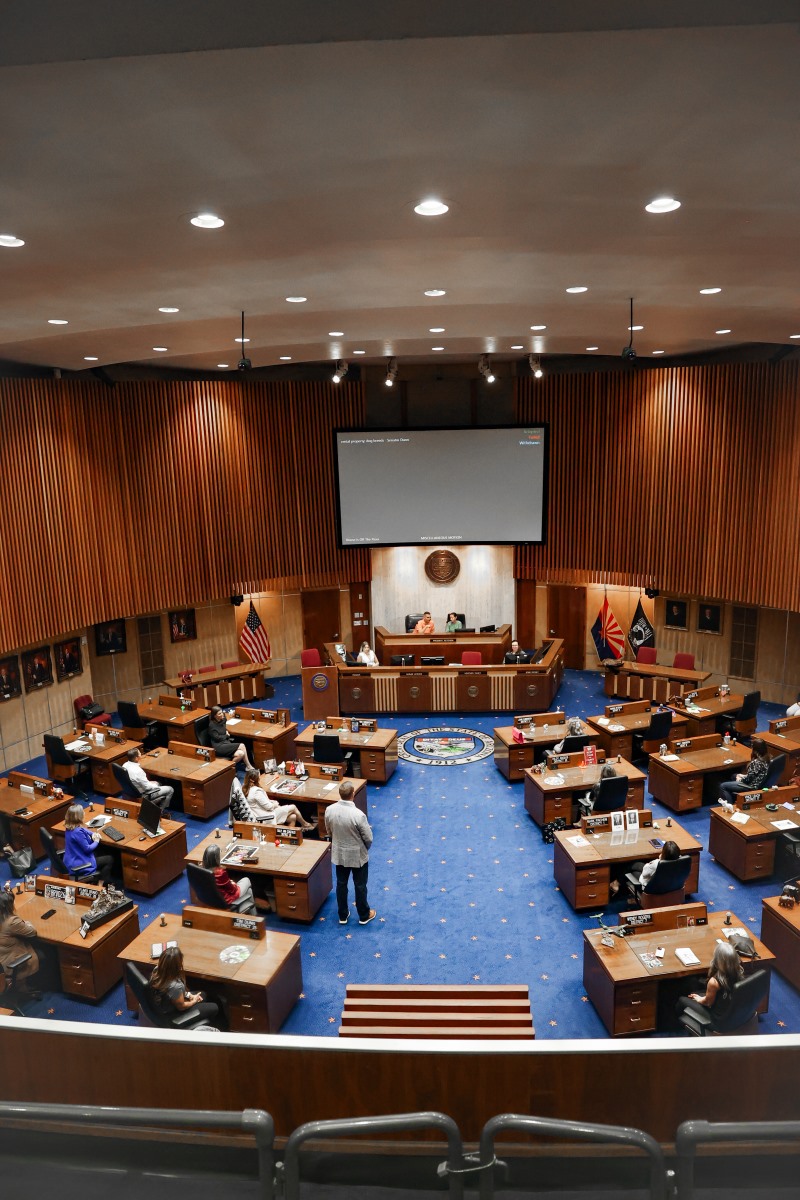 Housing Bills Take Center Stage at Arizona Legislature
The 2026 legislative session began with a roar, with battlelines forming on hot button issues.
As has been the case the last several years, housing affordability is already taking center stage among policy makers at the Arizona Capitol.
Recently, state lawmakers have passed laws to increase the supply of housing by making it easier to turn farmland into homes and turning economically or functionally obsolete commercial buildings into multihousing developments.
These efforts are bearing fruit with several deals announced to turn water-intensive agricultural areas into new subdivisions. And developers are hunting little-used office buildings that can transition or be demolished and redeveloped into apartments.
The Arizona Multihousing Association is again going on the offensive this session, pushing several important measures to increase housing affordability.
One of the biggest achievements of the last decade was a state low income housing tax credit (LIHTC) program approved by the Legislature. Combined with a similar federal program, developers received support to build low-income housing options in rural and urban communities.
A study from local economist Elliott D. Pollack & Co. found developments that have taken advantage of the tax credit have created nearly $750 million in economic activity and more than 4,500 construction jobs just since 2021.
In Globe, a developer converted a shuttered school into senior housing and in Glendale, a developer built 368 apartments for low-income residents.
However, last year Arizona became the only state to institute a LIHTC program and then let it sunset. Despite its unquestioned success, lawmakers failed to renew the program before it expired. AMA will be urging the Legislature to speedily approve it again.
Another effort by Rep. Alma Hernandez of Tucson would create a $5 million fund for rental assistance to Arizonans at risk of losing their rental housing. A state program that helps people on the edges remain in their homes is one of the most effective ways to avoid an eviction filing.
While some local governments have created legal funds for people already in eviction court, those cases rarely result in a tenant remaining in the home. Instead, a rental assistance fund would provide immediate help to those facing short-term financial challenges before the situation gets close to the possibility of eviction.
Even with a state budget that won’t see much in the way of new spending, this is an important mechanism for legislators and the governor to consider.
As housing affordability dominates the public square, AMA continues to advocate for smart solutions to expand access for homebuyers and renters in all economic ranges. The state must have sufficient supply to serve a growing Arizona.